Today
20
in History
26
January
February
March
April
May
June
July
August
September
October
November
December
01
Sun
02
Mon
03
Tue
04
Wed
05
Thu
06
Fri
07
Sat
08
Sun
09
Mon
10
Tue
11
Wed
12
Thu
13
Fri
14
Sat
15
Sun
16
Mon
17
Tue
18
Wed
19
Thu
20
Fri
21
Sat
22
Sun
23
Mon
24
Tue
25
Wed
26
Thu
27
Fri
28
Sat
29
Sun
30
Mon
31
Tue
...
03-12-1968
Oil discovered in Alaska’s Prudhoe Bay
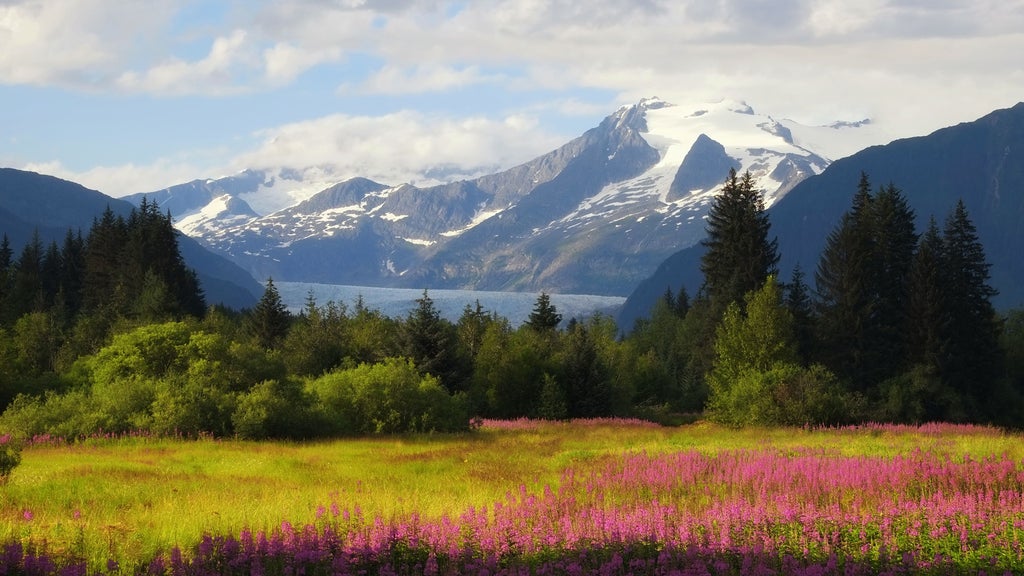
On March 12, 1968, oil is discovered in Prudhoe Bay—a remote region along Alaska’s northernmost coast—profoundly transforming the state.
When Alaska entered the Union in 1959, it was a poor, isolated territory, reliant on federal subsidies. Alaska’s Statehood Act specified that the state could claim 100 million acres to develop as it chose, independent of the federal government. Tom Marshall, a petroleum geologist, suggested that the state claim the North Slope, a region on Alaska’s northern coast. Marshall suspected that the state might strike oil in Prudhoe Bay, a flat landscape of permafrost bounded by the Arctic Ocean to the north and the Brooks mountain range to the south. To offset the costs of operating in such an inhospitable place, the oil field would have to be huge to be profitable: a “billion-barrel” field, at least.
Marshall was correct. Although the North Slope was covered in permafrost, millennia ago it was a warm, shallow sea, full of plant and animal life. As that organic matter decayed, it created a vast reserve of oil, the largest ever to be discovered in the United States. Since 1977, when oil finally started flowing at Prudhoe Bay, the oil field has pumped 17 billion barrels of oil.
At first, oil companies like BP had to use bush planes and sleds to position the necessary machinery in the icy tundra. Soon, however, the landscape transformed from a flat, white expanse to a bustling industrial outpost. Oil pipelines crisscrossed the bay like a “web of steel”, covering 700 square miles. At the height of the oil field’s production in the 1980s, Prudhoe Bay pumped 2 million barrels of oil per day.
The discovery of oil transformed the state of Alaska. The state government used the windfall from Prudhoe Bay to eliminate income tax, and provide every Alaskan with an annual check for $1,000. Not all transformations were positive, however. 11 million gallons of crude oil from Prudhoe Bay spilled into the pristine habitat of Prince William Sound, Alaska when the tanker Exxon Valdez ran aground on March 24, 1989. At the time, it was the largest oil spill in US history, surpassed only by Deepwater Horizon in 2010. The Exxon Valdez oil spill could not be contained, and it spread across 1,300 miles of coastline, decimating wildlife. Cleanup and restoration costs were nearly four billion dollars.
Drilling in Prudhoe Bay has slowed in the 21st century. The oil field’s output has declined steadily since its peak in 1988, from two million barrels-per-day to fewer than 500,000 barrels-per-day. BP sold its stake in Prudhoe Bay in 2020, ending a profitable, decades-long relationship which began with the company’s first exploratory office in Alaska in 1959.
More news today
loading...