Today
20
in History
26
January
February
March
April
May
June
July
August
September
October
November
December
01
Sun
02
Mon
03
Tue
04
Wed
05
Thu
06
Fri
07
Sat
08
Sun
09
Mon
10
Tue
11
Wed
12
Thu
13
Fri
14
Sat
15
Sun
16
Mon
17
Tue
18
Wed
19
Thu
20
Fri
21
Sat
22
Sun
23
Mon
24
Tue
25
Wed
26
Thu
27
Fri
28
Sat
29
Sun
30
Mon
31
Tue
...
03-21-1956
James Wong Howe becomes first Asian American to win an Academy Award
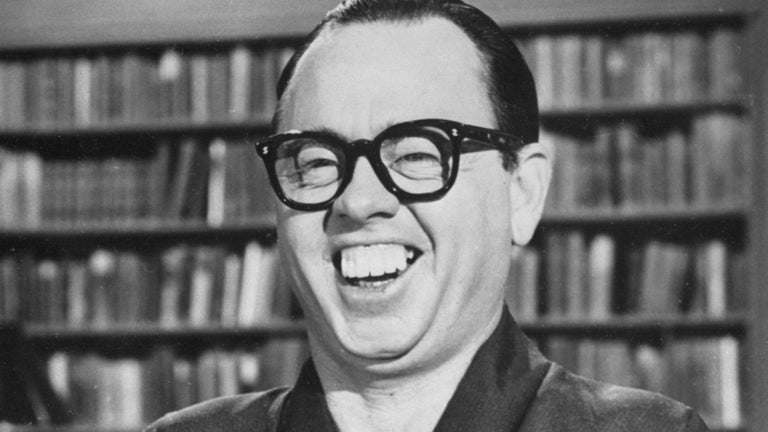
Noted for his innovative use of wide-angle shots, low-key lighting and deep focus, cinematographer James Wong Howe becomes the first Asian American to win an Academy Award on March 21, 1956.
Receiving the Oscar for Best Cinematography for The Rose Tattoo, starring Anna Magnani and Burt Lancaster, Howe had a knack for making “old stars young, plump stars thin, ordinary faces beautiful,” as he once said, according to Smithsonian.
Born in China in 1899 and immigrating to America at age 5, Howe got his Hollywood start as an assistant to Cecil B. DeMille. Considered one of the most influential cinematographers of all time, over his six-decade career he was nominated for 10 Academy Awards, winning twice. He also took home the Best Cinematography award for Hud in 1963.
Married in 1937 to writer Sanora Babb, who was white, Howe endured ongoing discrimination. The couple’s interracial marriage was not even recognized until 1949, when California nixed its anti-miscegenation law, according to Variety. “Even then, Wong Howe and Babb couldn’t go public, since mixed-race marriage violated the studios’ morals clause,” the publication writes. Post-World War II, Howe was investigated by the House Un-American Activities Committee and was “gray-listed.”
Although the gray-listing caused him to lose out on work in the 1940s and early 1950s, he still earned credits on more than 130 films, including The Thin Man, Picnic, Funny Lady and Yankee Doodle Dandy, working with legendary stars such as Ronald Reagan, Humphrey Bogart, Cary Grant, Sidney Poitier, Paul Newman and Barbra Streisand, among others.
More news today
loading...