Today
20
in History
26
January
February
March
April
May
June
July
August
September
October
November
December
01
Fri
02
Sat
03
Sun
04
Mon
05
Tue
06
Wed
07
Thu
08
Fri
09
Sat
10
Sun
11
Mon
12
Tue
13
Wed
14
Thu
15
Fri
16
Sat
17
Sun
18
Mon
19
Tue
20
Wed
21
Thu
22
Fri
23
Sat
24
Sun
25
Mon
26
Tue
27
Wed
28
Thu
29
Fri
30
Sat
31
Sun
...
05-11-1972
Labor organizer and civil rights activist Cesar Chavez begins hunger strike
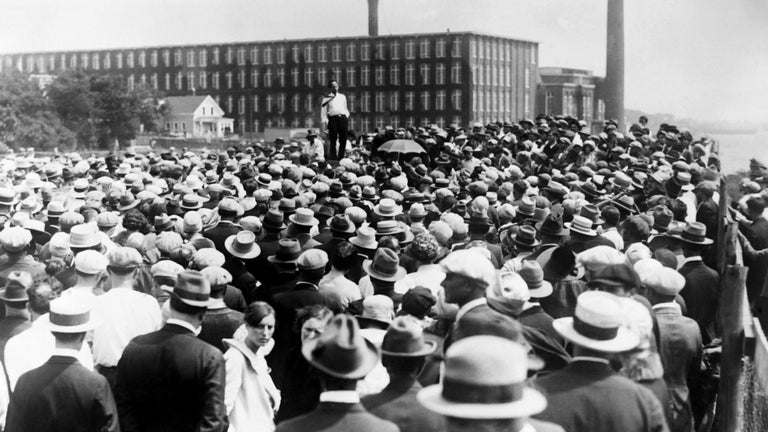
On May 11, 1972, Mexican American labor organizer and civil rights activist Cesar Chavez begins a hunger strike. The strike, which he undertook in opposition to an Arizona law severely restricting farm workers’ ability to organize, lasted 24 days and drew national attention to the suffering of itinerant farm workers in the Southwest.
A fervent admirer of Mahatma Gandhi, Chavez had undertaken several hunger strikes before. As a co-founder of the United Farm Workers, he and his strikes had played important roles in many major labor actions, including the five-year Delano Grape Strike in California. In response to the wave of organizing that had swept the region, Arizona’s legislature passed a bill that constricted workers’ rights to organize, outlawed secondary boycotts, and allowed growers to obtain a restraining order to prevent strikes during the harvest. Despite an outcry from farm workers and Chavez’s request that they meet to discuss the bill, Governor Jack Williams immediately signed it into law. Later that day, Chavez began his fast.
An increasingly emaciated Chavez appeared regularly at mass, attended by his supporters and others from the civil rights movement. Coretta Scott King, whose husband Martin Luther King Jr. had supported Chavez in his previous strikes, attended one such mass, as did Democratic presidential nominee George McGovern. Chavez referred to the strike as “a fast of sacrifice,” repeatedly reminding observers that his suffering was meant to represent the daily suffering of farm workers. Finally, after 24 days, he ended his fast at a memorial mass for Bobby Kennedy, who had thrown his political support behind Chavez’s cause in the years prior to his 1968 assassination. The following year, Chavez and the UFW organized another major agricultural strike, the Lettuce Growers Strike, and in 1975 California passed a landmark law affirming workers’ rights to boycott and to collective bargaining.
More news today
loading...