Today
20
in History
26
January
February
March
April
May
June
July
August
September
October
November
December
01
Wed
02
Thu
03
Fri
04
Sat
05
Sun
06
Mon
07
Tue
08
Wed
09
Thu
10
Fri
11
Sat
12
Sun
13
Mon
14
Tue
15
Wed
16
Thu
17
Fri
18
Sat
19
Sun
20
Mon
21
Tue
22
Wed
23
Thu
24
Fri
25
Sat
26
Sun
27
Mon
28
Tue
29
Wed
30
Thu
31
Fri
...
07-24-1943
Operation Gomorrah is launched
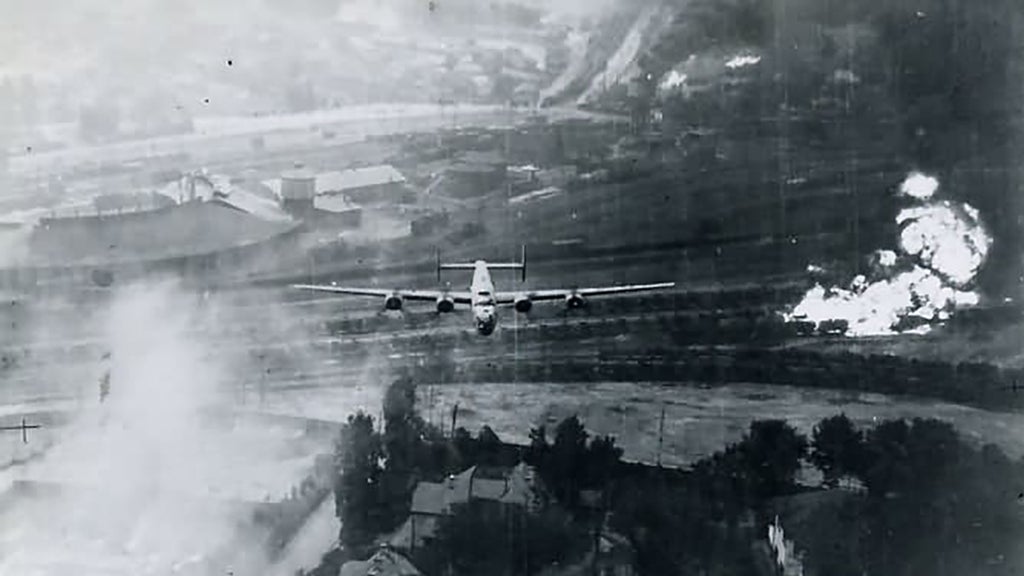
On July 24, 1943, British bombers raid Hamburg, Germany, by night in Operation Gomorrah, while Americans bomb it by day in its own “Blitz Week.”
Britain had suffered the deaths of 167 civilians as a result of German bombing raids in July. Now the tables were going to turn. The evening of July 24 saw British aircraft drop 2,300 tons of incendiary bombs on Hamburg in just a few hours. The explosive power was the equivalent of what German bombers had dropped on London in their five most destructive raids. More than 1,500 German civilians were killed in that first British raid.
Britain lost only 12 aircraft in this raid (791 flew), thanks to a new radar-jamming device called “Window,” which consisted of strips of aluminum foil dropped by the bombers en route to their target. These Window strips confused German radar, which mistook the strips for dozens and dozens of aircraft, diverting them from the trajectory of the actual bombers.
To make matters worse for Germany, the U.S. Eighth Air Force began a more comprehensive bombing run of northern Germany, which included two raids on Hamburg during daylight hours.
British attacks on Hamburg continued until November of that year. Although the percentage of British bombers lost increased with each raid as the Germans became more adept at distinguishing between Window diversions and actual bombers, Operation Gomorrah proved devastating to Hamburg—not to mention German morale. When it was over, 17,000 bomber sorties dropped more than 9,000 tons of explosives, killing more than 30,000 people and destroying 280,000 buildings, including industrial and munitions plants. The effect on Hitler, too, was significant. He refused to visit the burned-out cities, as the ruins bespoke nothing but the end of the war for him. Diary entries of high German officials from this period describe a similar despair, as they sought to come to terms with defeat.
More news today
loading...